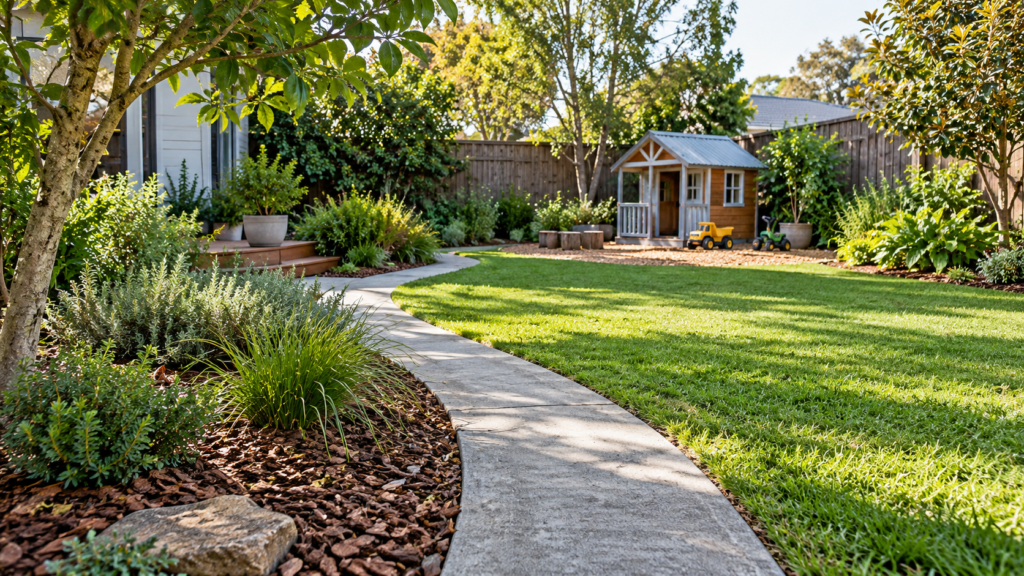
A backyard with clear paths, planted beds and space for children needs materials chosen for each area’s purpose. For smaller paving projects, mini mix concrete can be considered when planning a path or compact outdoor pad. Delivery access and preparation deserve attention before the work is booked. Around planted areas, Pine Bark offers a distinct surface finish that can help define garden beds. A separate play area requires a different assessment, particularly where equipment is involved. When comparing playground mulch, homeowners should check its intended application and installation requirements rather than choosing it simply because it looks similar to a garden product.
Start With How the Backyard Is Used
A useful backyard plan begins with everyday movement. The route between the back door, clothesline, shed and outdoor seating should be easy to follow without cutting through garden beds or crossing the middle of a play space.
Frequently used routes are sensible places to consider a permanent surface. Less-used areas may not need the same treatment, particularly if planting or future changes are still being considered. Mapping these routes before purchasing materials helps avoid creating paths that look attractive but do not match how the household uses the space.
The layout should also account for maintenance. Garden beds need room for pruning and replenishing their surface cover, while gates and narrow passages should remain accessible. A wheelbarrow route is easily overlooked until materials need to be moved from the driveway to the back fence.
Keeping planted, paved and play areas clearly separated makes material selection more straightforward. Each zone can then be assessed for its own drainage, upkeep and installation needs.
Prepare Permanent Surfaces Before Delivery
For a small concrete project, the visible surface is only one part of the job. The area needs to be measured, prepared and ready before the delivery arrives. Ordering first and resolving the layout later can leave little time to correct mistakes.
Measurements should include the proposed length, width and depth. The required depth and preparation depend on the surface’s intended use, so a path and a pad supporting heavier loads should not automatically receive the same specification. A suitable installer can establish those requirements and calculate the order quantity.
Access is another practical consideration. Homeowners should discuss driveway space, gate widths and the distance between the delivery point and the work area with the supplier and installer. A small order still needs a workable plan for moving and placing the material.
Drainage should be resolved during preparation. The finished surface must work with surrounding ground levels, garden edges and existing drainage. Where the correct arrangement is uncertain, the installer should assess it before pouring.
The schedule also needs to allow for finishing and curing. Household members, pets and garden equipment may need an alternative route while the new surface is unavailable.
Give Garden Beds Clear Boundaries
A planted bed looks more deliberate when its edges are easy to distinguish from paths and lawn. Defined boundaries also help contain loose surface material, reducing the amount that spreads into adjoining areas during gardening.
Before adding a bark covering, existing weeds and unwanted debris should be addressed. Applying a fresh layer over an untidy bed may improve its appearance temporarily, but it leaves the underlying maintenance work unfinished.
The material should be spread evenly, with space maintained around plant stems and tree trunks. Supplier guidance can help establish an appropriate application depth for the product and planting situation. More material is not automatically better, particularly where it interferes with watering or makes small plants difficult to inspect.
Ongoing maintenance should be part of the plan. Loose coverings can shift during gardening and gradually change as they weather. Occasional tidying and replenishment help keep the bed’s surface consistent without requiring the entire area to be redesigned.
Assess the Play Area Separately
A children’s play space should be planned around the activities and equipment it will accommodate. An open area for toys has different requirements from a space beneath climbing or swinging equipment.
A product’s name or appearance alone does not establish whether it suits a particular installation. Homeowners should ask for information about its intended use, relevant testing and installation instructions. Where equipment is involved, the surfacing requirements should be checked against that equipment rather than inferred from a neighbouring garden bed.
Loose surfacing also needs ongoing attention. Material can move away from frequently used spots, so maintenance access and routine inspection should be considered when designing the area. Edging should contain the surface while allowing practical access for replenishment.
A manageable backyard brings these decisions together through a clear plan. Permanent surfaces support regular movement, planted beds have defined boundaries, and the play space receives its own assessment. Choosing materials by purpose helps homeowners organise installation and understand the maintenance each area will need.


More Stories
Why Rain Water Control Matters
Creative Ideas for Outdoor Spaces
Best Playground Material for Kids